Episode 0 — The Genesis16+
This is how it began. Not with a war. Not with a throne. With a refusal.
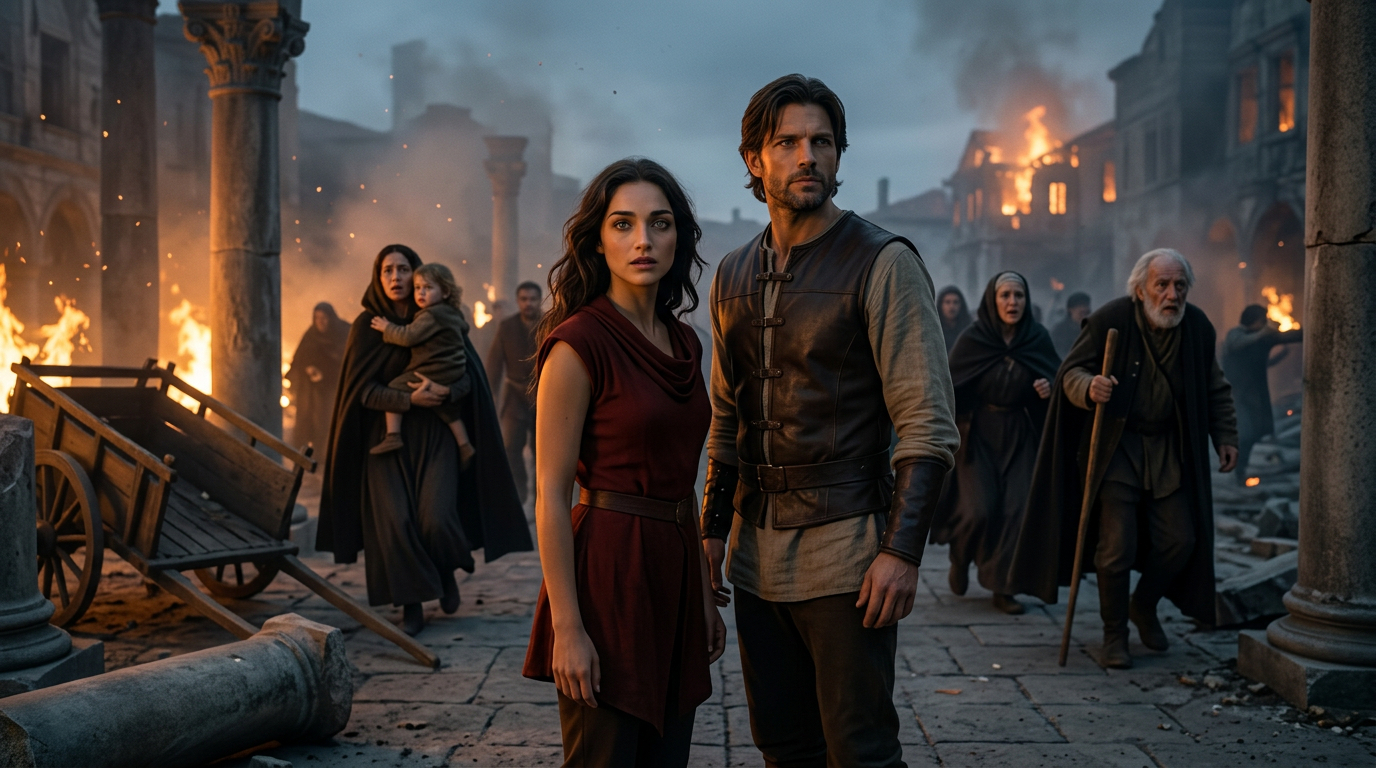
The Old Continent was dying long before anyone admitted it. The harvests had thinned. The temples had gone quiet in the way temples do when the gods are not arguing, only leaving. People kept walking the old paths because the paths were still there, not because the paths still led anywhere.
A World That Had Already Made Up Its Mind
To live in the Old Continent in those last years was to live inside an answer no one was asking the question to. Every street corner offered a different account of why the world was the way it was, and not one of those accounts asked the listener to do anything about it. Most folded themselves around the shape of the world and called the fold a virtue. Endurance. Loyalty. Realism. The fold was the same.
A few did not.
The Hearthborn
They were strangers when they found each other. They were not from the same village, not from the same trade. They were not, by any reckoning the Old Continent recognized, a people at all. What bound them was not blood. It was the refusal — quiet at first, and then less quiet — to accept the world as it was.
They called themselves the Hearthborn. The name came from the old word for those who carry their fire with them, instead of waiting at someone else’s hearth for warmth. It was not a boast. It was a description of a choice that had not yet been tested.
The Windscar
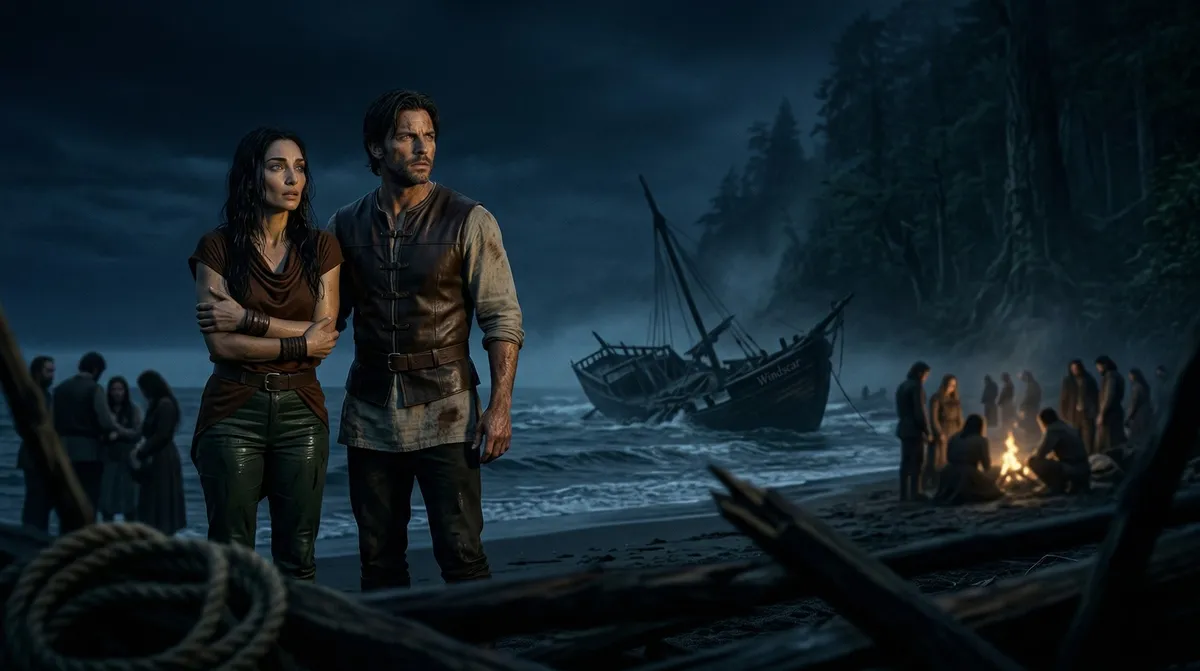
They bought passage on a merchant vessel called the Windscar. She was not a noble ship. She carried salt, rope, dried fish, and the kinds of letters that did not survive being read in daylight. Her captain asked few questions about cargo and fewer about people. He took the Hearthborn’s coin and pointed his bow west, toward a coast no map in the Old Continent agreed on.
Forty boarded.
For two nights, the sea was kind. They slept in narrow bunks and dreamed in the careful, half-believing way of people who had stopped expecting good news and were therefore unprepared to receive any.
On the third night, the storm found them.
It was not a storm the captain had words for. It came from a direction the wind was not supposed to come from, and it lasted longer than weather is allowed to last. The Windscar broke apart in pieces small enough to count. There was time, in the breaking, for the Hearthborn to learn things about each other they had not learned in the months ashore — who would carry whom, who would let go, who would shout names against a wind that could not hear them.
What Washed Up
Twenty of them.
Out of forty who boarded, twenty woke on the shore. The other twenty — the count was not finished, and would not be, for hours yet — were somewhere the sea had decided to keep them.
The coastline gave them nothing. Rocky. Littered with wreckage. A dense, dark forest began thirty paces inland and refused to suggest a path. There were no structures, no landmarks, no roads. The coast curved in both directions and offered no end. The air smelled of salt and of something older — wet earth, and decay, and the kind of patience the Old Continent had not prepared them to recognize.
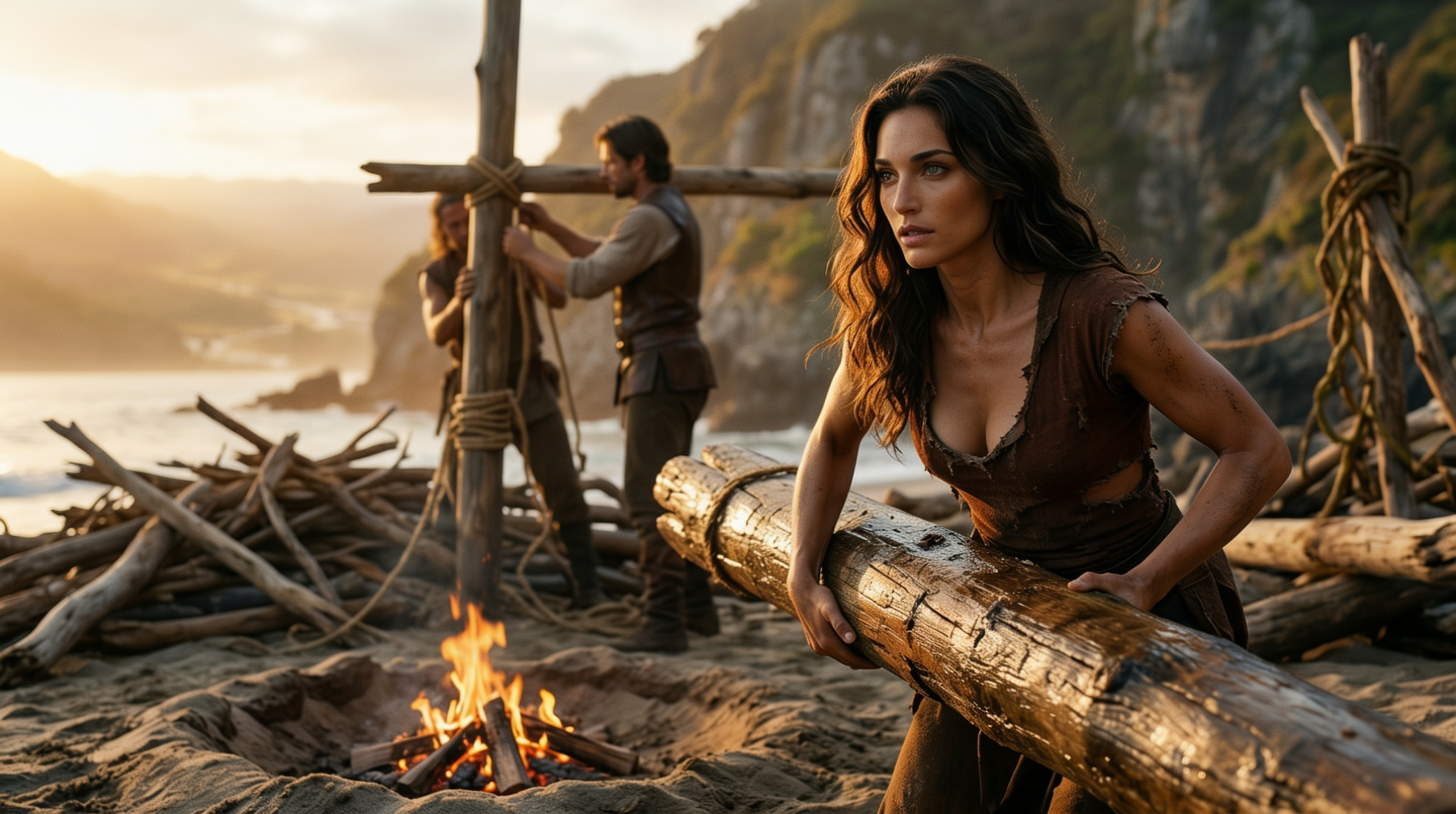
Some had broken bones. Most had cuts. All were soaked and cold and hungry. A few bundles of supplies had washed ashore. Most had not. They had no tools and no weapons beyond driftwood and broken planks. The tide was rising. It was pulling what little wreckage remained back to the sea, one piece at a time, the way a creditor collects.
Ardan and Lyra
Two of them moved before the others had decided to.
Ardan was bruised but standing. Without being asked, without being elected, he began the older work of leadership — the kind done with the shoulders, not the mouth. He pulled survivors from the surf. He counted heads. He carried those who could not carry themselves. He did not stay still. Every few minutes his gaze went to the treeline, and stayed there one breath too long, and came back.
Lyra said almost nothing. A gash had opened above her brow in the wreck and she had decided, without announcing the decision, that it was not yet a problem worth solving. She studied the coastline instead. She read the land before she spoke. And it was Lyra who heard them first — the sounds from the forest, when the light began to fail. Not wind. Not any creature she could yet name. Something else, with the patience of something that had heard people arrive on this shore before.
The First Night
Night was approaching, and there was no shelter. The injured needed care, and there was no medicine. The food was already low, and there was nothing edible on the shore. Some of the survivors were arguing about what to do. Some had begun to shake in a way that had nothing to do with the cold.
And the Hearthborn — what was left of them — stood on a shore that had not been promised to them and had not promised them anything in return, and understood, in the way people understand things when they have no choice but to understand them, that the story they had refused to live was over.
The story they would have to make had not yet begun.
What Comes Next Is Yours
The Hearthborn did not bring a king. They did not bring a creed. They did not bring a map. They brought themselves, and the wreckage of a ship, and twenty fewer souls than they started with, and a refusal old enough to have grown teeth.
What they build on this shore — what they become, what they break, who they bury, who they trust — is not yet written. It will be written by the choices the community makes, one junction at a time. The Old Continent decided for its people. This shore will not.
The forest is listening.
The first night is already asking.
The story continues
Episode 1 — The first crossing
Night falls on an unknown shore. The tide is swallowing what remains of the Windscar. The forest breathes with sounds no one can name. Twenty survivors, no shelter, no tools, no map. What do the Hearthborn do first?